





Eviction for the Sake of Eviction: The State’s Policy Against Al-Bqea’ah
Since 2022, Adalah and the Meezaan Organization for Human Rights have been representing the residents of the unrecognized village of Al-Bqea’ah in the Naqab (Negev) in their fight against eviction lawsuits filed against them by the State of Israel, which aims to displace their entire community.
Background
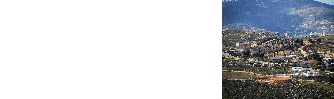
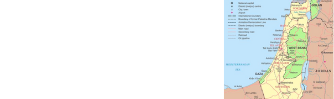
Al-Bqea’ah is situated between Arad and the Masada National Park, close to the Kfar Nokdim tourist site in the Naqab. Its inhabitants are members of the Al-Janabeeb tribe, which originally hails from the Kurnub region near present-day Dimona.
In the 1950s, the Israeli military expelled the Al-Janabeeb tribe from their ancestral land and forced them to relocate to land previously inhabited by the Al-Jahalin tribe, whose residents had previously been displaced to the occupied West Bank. This led to the founding of Al-Bqea’ah. Since then, the residents have built homes and raised families in the village. In 2022, however, the residents once again came under the threat of forced displacement when the Israel Land Authority (ILA) submitted a total of 18 eviction lawsuits against the entire community.
Adalah’s Fight against the Eviction Lawsuits
Case citation: Civil Case No. 45811-03-22, The State of Israel –Israel Land Authority v. Alkhamesei Musa, et al. (decision delivered 20 June 2024) (and 17 additional cases).
In 2022, the ILA filed 18 eviction lawsuits against the 290 residents of Al-Bqea’ah, labeling them “trespassers” on state land. Unlike other cases, such as Ras Jrabah, where the ILA claims the land is needed for urban development or national infrastructure, the state has provided no public interest-based justification for displacing the people of Al-Bqea’ah. The only explanation given is a plan to relocate residents to a new neighborhood in Maaret, a state-planned town designated by the Bedouin Development and Settlement Authority. This case is a prime example of the state’s policy of eviction for the sake of eviction, by concentrating the Bedouins in state-planned townships. The state deliberately filed the lawsuits separately instead of consolidating them, arguing that a single case would complicate negotiations and make it harder to reach agreements with individual families.
In October 20222, the Be’er Sheva Magistrate’s Court rejected a motion by Adalah and Al-Meezan to consolidate the 18 cases, forcing the defense team to manage 18 separate cases before 10 different judges. An appeal against this decision was also denied. This fragmentation has fractured the community, weakening the residents’ sense of community and social cohesion. This strategy sought to exhaust the community and its defense resources, employing “divide and conquer” tactics to undermine their resilience.
Between 2022 and 2024, both organizations submitted defense arguments for each lawsuit, supported by affidavits, archival evidence, and expert opinions. They also represented residents in numerous hearings, including cross-examinations, in different cases. In their defense, Adalah and Al-Meezaan argued that the residents’ presence on the land is both legal and long-standing, and that it has the state’s knowledge and approval. For decades, residents have lived in the village with the state's explicit or implicit consent. In fact, Israeli authorities connected the village to the Masada water pipeline and even depended on residents for search-and-rescue efforts for lost tourists. These facts make the ILA’s claims of “trespassing” unfounded.
The defense further argued that the planned evictions breach the residents’ constitutional rights to dignity, property, housing, and equality, and are discriminatory on the basis of nationality. They emphasized that eviction would result in homelessness, as the state has not provided adequate, available, or agreed-upon housing alternatives. Adalah and Al-Meezan also contended that the lawsuits were filed in bad faith and for irrelevant reasons, and that they constitute an abuse of the legal process. The underlying objective is to remove Bedouin residents from their land, furthering state policies of population transfer and Judaizing the Naqab.
One of the cases, that of Musa Alkhamesei, progressed further than the others, causing the other judges to uphold their own decisions until the final ruling in this case was delivered. The initial hearing in the Musa Alkhamesei case took place in December 2023, with closing arguments submitted by March 2024. On 20 June 2024, the Be’er Sheva Magistrate’s Court published its decision. Judge Or Adam recognized that the residents were not trespassers; however, he upheld the government’s right to evict them.
As for the merits of the case, the judge clarified that whether the defendants had been occupying the land since the 1950s – as they claimed in their affidavits – or since the 1980s – as shown by aerial photographs provided by the legal defense team – there is no doubt that the village has existed for decades, with the knowledge and tacit consent of the state.
However, the judge ruled that the state could revoke such consent. According to the judge, the state must consider the defendants’ history and their long-term residence in the land, and ensure that residents are not left without alternative housing. In this regard, the judge concluded that the state had taken these considerations into account and that the defendants were offered a suitable alternative housing arrangement, which they rejected because they wanted to remain on their land.
The court decided that there is merit in the claim that, after decades of living in the village and in the absence of an immediate need for the land, the defendants should be allowed a reasonable period of time to organize themselves, arrange an alternative place of residence, and submit applications to the planning authorities. The court ordered Musa Alkhamesei’s family to evict by 30 June 2026, and to pay NIS 25,000 in court expenses.
In addition, the court criticized the ILA for outsourcing its own legal representation to private lawyers and the State Attorney’s Office’s decision not to provide representation in the case despite the request of the court. The judge emphasized that evicting a Bedouin community after decades of residence is a complex issue that requires systemic solutions and cooperation between government agencies—needs not best served by private attorneys. The private lawyers hired by the state repeatedly argued that Bedouin communities were trespassing, even though Israeli courts recognized their long-standing presence in the Naqab.
In November 2024, the Magistrate’s Court, with the agreement of the parties, extended the ruling (after all appeals) in the Musa Alkhamesei case to all pending lawsuits concerning the residents of Al-Bqea’ah.
To read the eviction lawsuits [Hebrew], click here.
To read the defense arguments [Hebrew], click here.
To read the affidavits of Al-Bqea’ah’s residents [Hebrew], click here.
To read the expert opinions by Bimkom [Hebrew], click here and here.
To read the Magistrate’s Court’s decision [Hebrew], click here.
Appeal to the District Court
Case citation: Civil Appeal No. 5247-10-24, Alkhamesei Musa, et al. v. The State of Israel – Israel Land Authority.
On 7 October 2024, Adalah and Al-Meezan filed an appeal to the Be’er Sheva District Court. They contended that there was no urgent public necessity for the eviction of the residents, rendering the lawsuits essentially eviction for eviction’s sake. As a result, the decision of the ILA, as an administrative authority, to evict a village whose residents have legally lived on the land for decades without a pressing need is unreasonable, unjust, and in violation of administrative law and the villagers’ constitutional rights.
The appeal was originally scheduled to be heard on 5 February 2025, but the judges decided to postpone the hearing pending the Supreme Court’s decision in an appeal filed by Adalah in a different case, concerning the Bedouin village of Ras Jrabah.
To read the appeal [Hebrew], click here.
To read the ILA’s defense arguments [Hebrew], click here.
See also: