



The Proposed NGO Taxation Law: A Threat to Civil Society in Israel
Summary
The “Associations Bill (Amendment – Donation from Foreign Governmental Entity), 2024” (the “NGO Taxation Law”) seeks to introduce sweeping financial and legal sanctions on NGOs in Israel that receive funding from “foreign governmental entities”. The proposed legislation imposes an 80% tax on donations from these entities and prohibits the legal standing before the courts to any NGO whose primary funding comes from foreign governments. The law outlines a few exemptions, specifically for NGOs that receive Israeli state funding or a discretionary exemption from the Israeli Minister of Finance.
If passed, the bill would severely jeopardize the ongoing operations of NGOs registered in Israel, restrict the freedoms of association and expression, obstruct access to the courts, and undermine the independence of civil society. It would especially harm organizations that provide legal aid, community services, and human rights advocacy for marginalized populations, particularly Palestinians.
Key Provisions of the bill
● An 80% tax on donations from foreign governmental entities to NGOs registered in Israel. The definition of “foreign governmental entity” is broad. It includes not only foreign states, associations of states (e.g. the EU), and regional and local authorities, but also any organization primarily funded by such entities (e.g. development agencies).
● Exemptions are granted only to organizations that receive Israeli government funding and are recognized as “public institutions” under Section 46 of the Income Tax Ordinance (nonprofit entities whose Israeli donors are eligible for tax deductions), or to those granted an exemption at the discretion of the Finance Minister.
● Denial of legal standing: NGOs for which the primary source of funding is from foreign states may be barred from filing legal petitions to the Israeli courts, unless they are recipients of Israeli state funding or receive an exemption.
Legal and Human Rights Implications
● Freedoms of Association and Expression: The bill imposes punitive financial measures on NGOs that challenge and expose human rights violations against Palestinians in Israel and the occupied territory, as made clear by the bill’s proponents. Even NGOs exempted from the tax face pressure to self-censor in order to preserve both (Israeli) state and foreign funding. The bill strikes at the heart of the rights to freedom of association and expression, aiming to silence lawful dissent and to dismantle critical advocacy. Palestinian civil society in Israel will be greatly impacted as space for human rights work has already been subjected to decades of state repression. Alongside mainstream media and political rhetoric, the bill fuels a decades’ long campaign of delegitimization that threatens these civil society organizations’ credibility and ability to operate.
● Denial of Access to Courts: By stripping NGOs of legal standing based on their funding sources, the bill violates the right to receive a legal remedy and seeks to shield state actions from legal challenges. It is an attempt to silence legal advocates and undermine the rule of law.
● Targeted Political Repression: The bill targets NGOs that work to expose rights violations committed by Israel, and especially those that defend the rights of Palestinians. Its sponsor, MK Ariel Kallner (Likud), openly called such groups “delegitimization organizations,” thereby revealing the bill’s true objective, which is to punish and silence lawful, rights-based opposition to the state.
● Direct Harm to Palestinian Communities: The bill will directly harm Palestinian communities in Israel and the OPT as they rely on independent civil society organizations for legal aid, human rights protections, and the provision of essential services. The bill must therefore be viewed as part of Israel’s broader system of structural repression and human rights violations against the Palestinian people.
Background and Legislative History
The NGO Taxation Law builds on previous measures to restrict and de-legitimize NGOs, including through amendments made in 2011 and 2016 to the Israeli Associations Law. The 2011 law required NGOs to report donations from foreign governmental entities, while the 2016 law mandated public disclosure for NGOs primarily funded by such entities. Both laws originated in bills similar to the currently proposed law and were watered down after strong domestic and international opposition.
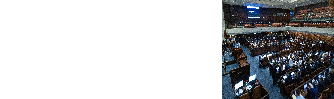
The ministerial committee for legislation approved the bill on February 16th, 2025, formally endorsing it to advance to the Knesset, which passed its preliminary reading on February 19th. On May 5th, 2025, the Knesset’s Constitution, Law and Justice Committee held its first hearing on the new bill. During the session, right-wing organization Im Tirtzu presented examples of human rights petitions—many filed in response to war-related abuses or violations of detainees’ rights—as justification for the bill. MK Kallner accused petitioning organizations of engaging in “foreign government-funded legal warfare against the State of Israel”.
At the second committee hearing, held on May 28th, 2025, the Registrar of Associations reported that between 2021 and 2023, roughly 180-200 associations declared donations from foreign governmental entities. Of these, 130 do not receive any state funding, and between 20 and 40 organizations were primarily funded by foreign governmental sources.
The Registrar also disclosed that, in the past year, oversight procedures were launched for 200 associations that received over NIS 100,000 from foreign sources. Oversight is now in advanced stages for about 100 organizations, and so far, only five have been found to have violated disclosure requirements.
Notably, Im Tirtzu had previously alleged 500 violations of quarterly reporting rules. The Registrar clarified that no such data exists and that their office has no figures to support this claim. This reinforces what is already clear: the bill is part of an inflammatory and politically-motivated campaign against civil society that is not grounded in facts. MK Kallner reiterated his claim that foreign governments were manipulating Israeli society through funding, citing the NGO Breaking the Silence, which is critical of the Israeli military’s actions in the OPT, as an example.
A closed-door hearing is scheduled for June 3rd, 2025, excluding the public from the legislative process and denying oversight and transparency. A third public committee hearing is scheduled for June 10th, 2025.
Comparative Context
The bill not only mirrors authoritarian “foreign agent” legislation used to suppress civil society worldwide, in countries such as Russia, Belarus and Hungary, the proposed Israeli legislation goes even further. As Human Rights Watch has observed, such laws typically follow a shared pattern: stigmatizing foreign-funded NGOs, imposing punitive restrictions, and curtailing their legal and political engagement (HRW, 19 September 2024).
A Hungarian law, significantly less severe than the Israeli bill, was struck down by the European Court of Justice in a landmark ruling in 2020. The Court, as cited by Human Rights Watch, “identified the right to access funding as a substantive element of freedom of association and recognized the chilling effect of such laws, which can foster a climate of distrust in the work of associations.” See ECJ press release here.
Israel’s proposed bill represents an even more extreme version of this legislative trend, one that threatens to entrench political repression by dismantling critical civil society.
Consequences
If enacted, the bill would gravely damage Israel’s civil society sector. It would:
● Force NGOs to significantly scale back or shut down due to financial unsustainability, putting a stop to many social, educational and legal programs offering needed support to vulnerable Palestinian communities;
● Restrict access to legal redress for vulnerable communities;
● Silence almost the only remaining critical voices against the Occupation and institutionalized discrimination and suppress dissenting public discourse;
● Undermine international cooperation and damage donor relationships.
Calls to Action
Donor states must urgently and decisively oppose the NGO Taxation Law, including by publicly condemning the bill, engaging Israel through bilateral channels, and warning of potential political, social and financial consequences if the bill becomes law. States should increase political and financial support for Palestinian NGOs in Israel. The European Union and its member states should use their leverage to oppose the NGO bill and push back against further human rights violations by Israel. In the context of the ongoing and historic review of the EU-Israel Association Agreement, triggered by Israel’s apparent breach of its Article 2 human rights commitments, the EU and EU member states must continue to actively support the process, pressing for clear, concrete, and enforceable outcomes.
Endorsed by the following civil society organizations:
· Adalah – the Legal Center for Arab Minority Rights in Israel
· Al-Tufula Center NNI
· Arab Culture Association
· Assiwar – the Feminist Arab Movement
· Baladna – Arab Youth Association
· Citizens for the Environment
· I’lam – The Arab Center for Media Freedom, Development and Research
· Kayan Feminist Organization
· Mada Al-Carmel – Arab Center for Applied Social Research
· SDC – Social Development Haifa
· The Follow up Committee on Arab Education
· Tishreen Association
· 7amleh – Arab Center for Social Media Advancement
· Women Against Violence
Read briefing paper in a PDF format here